Picture this: you’re walking your pup through Prince’s Island Park in Calgary when suddenly they spot a squirrel across the busy Memorial Drive. A solid “stay” command could be the difference between a close call and a tragedy. The stay command isn’t just a neat party trick – it’s one of the most crucial safety behaviours your dog can master, whether you’re in downtown Toronto or hiking the Rockies.
Unfortunately, many Canadian dog owners struggle with inconsistent stay training. Your dog might hold a perfect stay in the living room but bolt the moment you’re at the off-leash park in Vancouver’s Pacific Spirit. Sound familiar? Don’t worry – with the right progressive training approach, you can build a bulletproof stay that works everywhere from your backyard in Winnipeg to the bustling markets of Byward in Ottawa.
The Foundation: Starting Your Stay Training Right
Building the Basic Stay Position
Before we dive into duration and distance, your dog needs to understand what “stay” actually means. Think of it like learning to drive – you wouldn’t start on the 401 during rush hour, eh?
Step 1: Choose Your Position Start with either a sit or down position. Down stays are generally more reliable for longer durations since your dog is already in a relaxed position. Practice in a quiet room with minimal distractions.
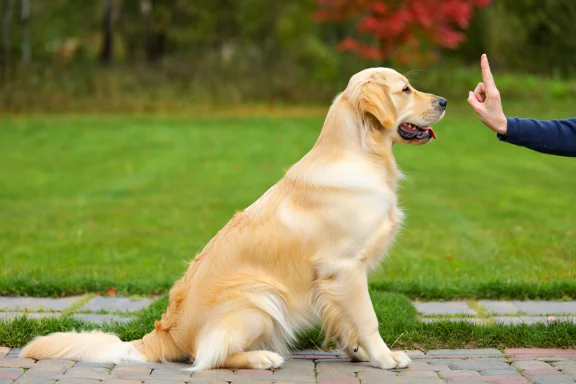
Step 2: The Magic Hand Signal Combine your verbal “stay” with a clear hand signal – an open palm facing your dog works best. Canadian dogs respond well to clear, consistent signals (we’re a pretty straightforward bunch, after all).
Step 3: The Release Word This is crucial – your dog needs to know when the stay is officially over. Popular release words include “okay,” “free,” or “break.” Pick one and stick with it throughout the family.
Common Foundation Mistakes to Avoid
- Repeating the command: Say “stay” once, then wait. Repeating it teaches your dog to ignore the first command.
- Moving too fast: Canadian winters teach us patience – apply that same mindset to dog training.
- Inconsistent family rules: If Dad lets Buddy break the stay whenever he wants, but Mom doesn’t, you’re setting everyone up for frustration.
Progressive Duration Training: From Seconds to Minutes
Week 1-2: The 3-Second Rule
Start with incredibly short durations. We’re talking 2-3 seconds max. This might seem ridiculously short, but you’re building confidence and understanding.
Training Schedule:
- 5-10 repetitions per session
- 2-3 sessions daily
- Immediately reward success with high-value treats
Week 3-4: Extending to 30 Seconds
Once your dog consistently holds a 3-second stay, gradually increase duration. Add 2-3 seconds every few successful repetitions.
Pro Tip for Canadian Winters: Practice indoors during those brutal February days when it’s -30°C outside. Your heated living room is perfect for focused training sessions.
Month 2: Building to 2-3 Minutes
This is where many dog owners hit roadblocks. The key is understanding that dogs don’t naturally want to stay still – it goes against their instincts to explore and interact.
Advanced Duration Techniques:
- Use a timer so you’re consistent with timing
- Gradually increase your own movement while your dog stays
- Practice during different times of day (morning energy vs. evening calm)
Distance Training: From Close Contact to Across the Yard
Phase 1: Baby Steps Away (Literally)
Start just one step back from your dog. If they break the stay, calmly return them to position without drama. Canadian politeness applies to dog training too – no need for harsh corrections.
Phase 2: Room-Length Distances
Work up to moving across a standard Canadian living room (about 12-15 feet). This usually takes 3-4 weeks of consistent practice.
Regional Training Considerations:
- Prairie provinces: Use that wide-open space to your advantage for distance training
- BC mountains: Start on flat terrain before adding elevation changes
- Maritime provinces: Coastal winds can be distracting – practice in sheltered areas first
Phase 3: Out-of-Sight Training
This advanced skill is incredibly useful for Canadian households. Imagine being able to tell your dog to stay in the mudroom while you grab the mail, even when they can’t see you.
Progression Steps:
- Step behind a doorway for 2 seconds
- Gradually increase out-of-sight duration
- Practice in different rooms of your house
- Eventually work up to going upstairs while your dog stays downstairs
Adding Real-World Distractions
Level 1: Household Distractions
Start with mild distractions like:
- Dropping a toy nearby
- Having another family member walk past
- Playing quiet TV sounds
Level 2: Outdoor Canadian Challenges
Our country presents unique training opportunities and challenges:
Urban Distractions:
- Streetcars in Toronto
- Festival crowds in Montreal
- Construction noise (there’s always construction somewhere, right?)
Rural/Wilderness Distractions:
- Wildlife sightings
- Other dogs at the local dog park
- Seasonal changes (spring mud, fall leaves, winter snow)
Level 3: Emergency Preparedness
Train your stay command for genuine safety scenarios:
- Dropping something dangerous (chocolate, medication)
- Answering the door to strangers
- Loading/unloading the car safely
Troubleshooting Common Stay Command Problems
“My Dog Breaks the Stay When I Move”
This usually means you increased distance too quickly. Go back to shorter distances and build up more gradually. Canadian dog training follows the same principle as our healthcare system – slow and steady, but it works.
“Perfect at Home, Disaster Everywhere Else”
This is classic “location dependence.” You need to practice the stay command in at least 10 different locations before your dog truly understands it applies everywhere.
Recommended Practice Locations:
- Your local Tim Hortons patio (during quiet hours)
- Community center parking lots
- Friends’ houses
- Different rooms in your home
- Various outdoor spaces
“Loses Focus After 30 Seconds”
Build duration more gradually and ensure you’re using high-enough value rewards. What motivates your dog? Cheese? Freeze-dried liver? Find their currency and use it.
Real-World Applications for Canadian Dog Owners
Winter Safety Applications
- Staying put while you clear ice from car doors
- Remaining calm during winter boot and coat removal
- Waiting patiently during those long Canadian winter gear routines
Summer and Outdoor Adventures
- Holding position while you set up camp
- Staying safe near water (crucial for cottage country)
- Remaining still during Canada Day fireworks or other celebrations
Urban Living Applications
- Waiting for elevator doors to fully open
- Staying put while you handle apartment building entry systems
- Remaining calm during busy city street crossings
Maintaining Your Dog’s Stay Command Long-Term
Weekly Practice Schedule
Even after your dog masters the stay command, regular practice keeps skills sharp:
- Monday/Wednesday/Friday: Duration practice (5-10 minutes)
- Tuesday/Thursday: Distance work in different locations
- Weekends: Real-world application practice
Seasonal Training Adjustments
Spring: Practice with increased wildlife activity and muddy conditions Summer: Work around Canada Day celebrations, camping trips, and increased outdoor activity Fall: Navigate back-to-school routines and hunting season awareness Winter: Maintain skills during indoor training periods and practice with winter gear distractions
Building a Bulletproof Stay Command
Remember, teaching a reliable stay command is like building a good relationship – it takes time, consistency, and mutual respect. Your dog isn’t trying to frustrate you when they break a stay; they’re either confused about expectations or the training progression moved too quickly.
The stay command becomes truly valuable when your dog understands it means “freeze exactly where you are until I release you,” regardless of what’s happening around them. Whether you’re dealing with a moose in your Yukon backyard or navigating the crowds at the Calgary Stampede, a solid stay command gives you control and keeps your dog safe.
Start with these progressive methods today, practice consistently, and within a few months, you’ll have a dog whose stay command you can trust in any situation. Your future self (and your dog) will thank you for putting in this foundational work.
Ready to transform your dog’s stay command from unreliable to rock-solid? Start with just 5 minutes of practice today – consistency beats perfection every time.