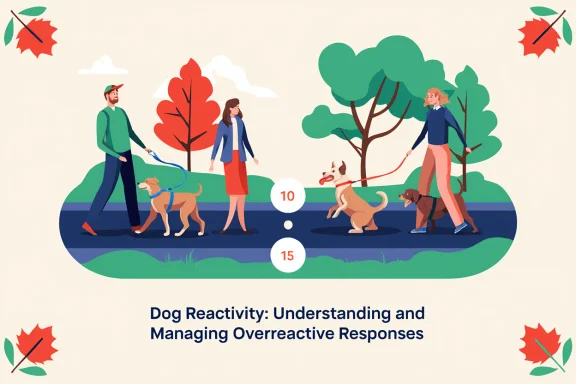
Does your dog transform from a gentle companion into a barking, lunging tornado the moment they spot another dog on your evening walk through High Park or along the Seawall? You’re not alone, eh. Dog reactivity affects countless Canadian pet owners from Vancouver’s dog beaches to Halifax’s walking trails, and understanding the difference between reactivity and aggression could be the key to reclaiming those peaceful neighbourhood strolls.
What is Dog Reactivity? The Real Scoop
Dog reactivity isn’t aggression in disguise – it’s an overreaction to specific triggers that stems from fear, frustration, or overstimulation. Think of it like someone jumping at a sudden loud noise during a Leafs game – it’s an automatic response, not a calculated attack.
Reactive dogs typically display intense responses to stimuli like other dogs, people, bicycles, or even squirrels. Unlike aggressive behaviour, which aims to cause harm or control resources, reactivity is often a defensive mechanism. Your pup isn’t trying to hurt anyone – they’re just overwhelmed and don’t know how to cope.
Key Signs Your Dog Might Be Reactive:
- Excessive barking, lunging, or pulling on leash
- Hackles raised (fur standing up along the back)
- Spinning, jumping, or other repetitive behaviours
- Inability to focus or respond to commands when triggered
- Quick recovery once the trigger disappears
Reactivity vs. Aggression: Know the Difference
Understanding this distinction is crucial for Canadian dog owners seeking the right training approach. According to the Canadian Veterinary Medical Association, misidentifying reactivity as aggression leads to inappropriate training methods that can worsen the problem.
Reactive dogs typically:
- Show intense but brief responses
- Calm down quickly when the trigger leaves
- Display body language indicating stress or fear
- Often have specific triggers (not generalized)
Aggressive dogs typically:
- Show calculated, persistent threatening behaviour
- May continue the behaviour even after trigger removal
- Display confident, forward body posture
- Often target-specific (territorial, resource-guarding, etc.)
The Science Behind Counter-Conditioning
Counter-conditioning works by changing your dog’s emotional response to triggers. Instead of feeling anxious or frustrated when seeing another dog, we teach them to feel happy and relaxed. It’s like training your brain to associate the sound of a snowplow with cozy winter mornings instead of dreading the early wake-up call.
The Canadian Weather Advantage
Our diverse seasons actually provide excellent training opportunities. Winter walks with fewer distractions let you work on basics, while busy summer festivals offer controlled exposure to multiple triggers. Use this to your advantage!
Desensitization Protocols That Actually Work
Desensitization involves gradually exposing your dog to triggers at a level they can handle without reacting. Think of it as building tolerance like acclimatizing to cold Prairie winters – you start with light jackets in fall, not jumping straight into -40°C blizzards.
Step-by-Step Desensitization Process:
Phase 1: Identify the Threshold Determine the distance at which your dog notices triggers but doesn’t react. This might be 50 metres for some dogs, 10 metres for others. Every dog’s different, just like how some Canadians wear shorts in 10°C weather while others need parkas.
Phase 2: Create Positive Associations At threshold distance, pair the sight of triggers with high-value treats (think beaver-tail-level delicious). Your dog should start anticipating good things when they see other dogs.
Phase 3: Gradual Exposure Slowly decrease distance over multiple sessions. Rush this process and you’ll set back your progress faster than the Leafs in playoffs.
Phase 4: Real-World Application Practice in various Canadian environments – from busy Byward Market to quiet suburban streets in Saskatoon.
Practical Training Techniques for Canadian Conditions
The “Look at That” Game
Teach your dog to calmly observe triggers rather than react. When your dog notices another dog, mark the moment with “yes!” and reward. Soon they’ll automatically look to you for treats when they spot potential triggers.
Emergency U-Turn Protocol
Perfect for narrow Canadian sidewalks or trails. When you spot a trigger approaching, simply turn around and walk the other direction while keeping things positive. No drama, no confrontation – just like how we handle awkward encounters at Tim Hortons.
Distance Management Tools
Use physical barriers like parked cars, trees, or even snow banks during winter to create comfortable distances during training sessions.
Managing Triggers in Canadian Environments
Urban Challenges (Toronto, Vancouver, Montreal)
- Busy sidewalks require excellent timing
- Use early morning or late evening for training
- Apartment building encounters need specific protocols
Suburban and Rural Considerations
- Off-leash dogs pose unique challenges
- Wildlife triggers (deer, geese, rabbits) require different approaches
- Seasonal hunting activities may increase anxiety
Weather-Specific Strategies
- Winter gear can muffle sounds and limit visibility
- Summer festivals provide controlled socialization opportunities
- Rainy days offer natural distance buffers
When to Seek Professional Help
If your dog’s reactivity includes any of these red flags, contact a certified professional trainer immediately:
- Redirected aggression toward you or family members
- Escalating intensity despite consistent training
- Multiple bite attempts or contact
- Generalized fearfulness affecting quality of life
Look for trainers certified through organizations like the Canadian Association of Professional Dog Trainers (CAPDT) or those using science-based positive reinforcement methods.
Long-Term Success Strategies
Remember, managing reactivity is a marathon, not a sprint – kind of like waiting for the Leafs to win the Cup. Consistency beats intensity every time. Set realistic expectations, celebrate small victories, and understand that some dogs may always need management rather than complete “cures.”
Maintenance Training Tips:
- Practice “look at that” during calm moments
- Maintain high-value treat rewards
- Regular refresher sessions prevent regression
- Stay patient – progress isn’t always linear
Creating a more relaxed, confident dog takes time, but with proper understanding and consistent application of counter-conditioning and desensitization techniques, those stressful walks can become enjoyable bonding experiences again.
Ready to start transforming your reactive dog’s behaviour? Begin with identifying their specific triggers and threshold distances. Every journey of a thousand miles begins with a single step – or in this case, a single calm glance at a trigger without reaction.