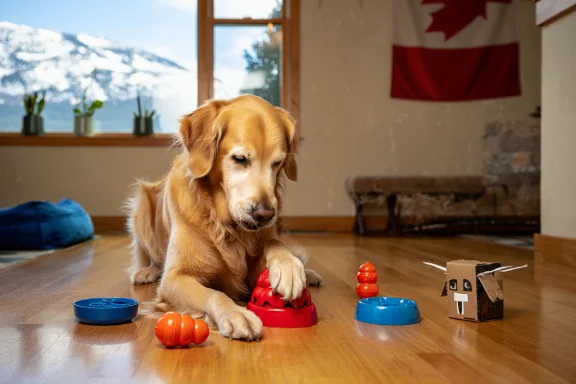
Just like Canadians need mental stimulation during those long winter months cooped up indoors, our four-legged friends require regular brain workouts to stay happy and healthy. Mental enrichment isn’t just a fancy term trainers throw around – it’s essential for preventing destructive behaviors and keeping your dog’s mind as sharp as a Zamboni blade on fresh ice.
Whether you’re dealing with a bored Border Collie in Winnipeg or a restless Retriever in Halifax, mental stimulation can transform your hyperactive pup into a content companion. Let’s dive into practical brain games that’ll keep your dog engaged from the Maritimes to the Rockies.
Why Mental Enrichment Matters More Than You Think
A tired dog is a good dog, but we’re not just talking about physical exhaustion here. Mental fatigue is equally important and often more effective at curbing problematic behaviors. Think of it this way: would you rather run 10 kilometres or solve complex puzzles for an hour? Both leave you drained, but in different ways.
Dogs who lack mental stimulation often develop what behaviorists call “displacement behaviors” – destructive chewing, excessive barking, digging, or that classic move of redesigning your couch cushions. These aren’t signs of a “bad” dog; they’re symptoms of an under-stimulated mind seeking outlets.
Research from the University of Guelph shows that dogs who receive regular mental enrichment display:
- 40% fewer destructive behaviors
- Improved problem-solving abilities
- Better stress management
- Enhanced human-dog bonding
DIY Puzzle Games: Budget-Friendly Brain Busters
You don’t need to drop a loonie on expensive puzzle toys when household items work just as well. Here are some Canadian household heroes for mental enrichment:
The Muffin Tin Challenge
Grab a standard muffin tin and place treats in each cup. Cover with tennis balls and watch your dog figure out how to remove the balls to access the goodies. Start with a few cups covered, then gradually increase the difficulty.
Frozen Kong Adventures
Fill a Kong toy with your dog’s favorite treats, add some plain Greek yogurt or peanut butter (xylitol-free, obviously), and freeze overnight. This creates a long-lasting puzzle that’s perfect for those scorching summer days or when you need to keep your pup occupied during a Zoom call.
The Towel Roll Surprise
Lay treats along a towel, then roll it up. Your dog will need to unroll and manipulate the towel to access the rewards. It’s like unwrapping Christmas presents, but for dogs and without the wrapping paper carnage.
Cardboard Box Treasure Hunt
Save those Amazon boxes (we all have too many) and create a treasure hunt. Place treats in various boxes, seal some lightly, and let your dog explore. The different textures, sounds, and challenges keep them engaged for ages.
Scent Work: Tapping Into Your Dog’s Superpower
Dogs experience the world primarily through their noses – they have roughly 300 million scent receptors compared to our measly 6 million. Scent work exercises tap into this natural ability and provide incredible mental stimulation.
Indoor Scent Games
Start simple with the “find the treats” game. While your dog is in another room, hide small treats around your living space. Start obvious (on the floor in plain sight) and gradually make hiding spots more challenging (under furniture, behind curtains).
The Classic Shell Game
Use three identical containers (yogurt containers work perfectly). Place a treat under one, shuffle them around, and let your dog use their nose to find the winner. It’s like the old carnival game, but your dog always wins.
Sock Snuffle Hunt
Fill a clean sock with treats, tie it loosely, and hide it somewhere in your house. Your dog will need to locate it using scent and then figure out how to access the goodies inside.
Advanced Brain Training Exercises
Once your dog masters the basics, it’s time to level up with more complex challenges that would make even a Mensa member proud.
Name Recognition Games
Teach your dog the names of different toys. Start with two distinctly different toys – say a rope and a ball. Practice asking for each by name until your dog reliably brings the correct item. Gradually add more toys to their vocabulary. Some Border Collies in Calgary have learned over 50 toy names!
The Patience Challenge
This exercise builds impulse control while providing mental stimulation. Place a treat on the floor and cover it with your hand. Only reward your dog when they stop trying to get the treat and make eye contact with you. Gradually increase the wait time and remove your hand while maintaining the “wait” command.
Multi-Step Problem Solving
Create obstacle courses using household items. For example, your dog might need to ring a bell, then sit on a mat, then bring you a specific toy to earn their reward. These multi-step challenges engage higher-level thinking skills.
Seasonal Mental Enrichment Ideas
Winter Wonderland Activities
- Hide treats in snow piles (if your dog enjoys cold weather)
- Create ice cubes with treats frozen inside
- Set up indoor agility courses using furniture and blankets
Summer Brain Games
- Frozen treat puzzles for hot days
- Water-based scent games in kiddie pools
- Outdoor treasure hunts in your backyard
Rainy Day Solutions
- Rotate toy selection weekly to maintain novelty
- Practice new tricks indoors
- Set up multiple puzzle stations around your home
Signs Your Dog Needs More Mental Stimulation
Watch for these telltale signs that your furry friend needs more brain games:
- Excessive chewing on inappropriate items
- Attention-seeking behaviors like pawing or whining
- Hyperactivity despite adequate physical exercise
- Repetitive behaviors like tail chasing or pacing
- Difficulty settling down and relaxing
Creating a Mental Enrichment Schedule
Consistency is key to successful mental enrichment. Aim for 15-30 minutes of dedicated brain games daily, split into shorter sessions. Here’s a sample weekly schedule:
Monday/Wednesday/Friday: Puzzle feeding (breakfast in a puzzle toy) Tuesday/Thursday: Scent work sessions Saturday: New trick training Sunday: Free exploration time with rotating toys
The Bottom Line on Canine Mental Health
Mental enrichment isn’t just about keeping your dog busy – it’s about respecting their intelligence and providing outlets for natural behaviors. A mentally stimulated dog is more confident, better behaved, and forms stronger bonds with their human family.
Start small with one or two activities and gradually build your dog’s mental fitness routine. Remember, every dog is different – what challenges a Golden Retriever might bore a Border Collie, and vice versa. Pay attention to your individual dog’s preferences and adjust accordingly.
Ready to transform your couch potato into a canine Einstein? Start with one simple puzzle game today and watch your dog’s confidence and contentment grow. Your furniture (and your sanity) will thank you for it.
For personalized mental enrichment plans tailored to your dog’s specific needs and energy level, consider booking a consultation with a certified dog trainer who can assess your pup’s unique requirements and design a brain training program that works for your lifestyle.