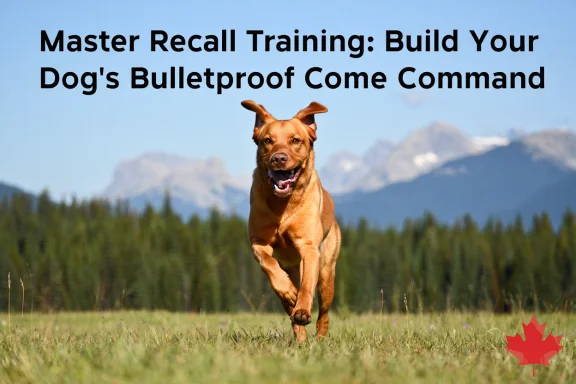
Every dog owner across Canada has been there – watching in horror as their furry friend bolts toward something fascinating at Nose Hill Park or disappears into the woods at Algonquin. A reliable recall command isn’t just convenient; it’s a literal lifesaver that could prevent your dog from running into traffic on the Trans-Canada Highway or getting lost in our vast wilderness.
The recall command is arguably the most important skill you’ll ever teach your dog, yet it’s also one of the most challenging to master. Why? Because you’re asking your pup to abandon whatever exciting thing they’re doing and come back to you instead. That’s like asking a kid to leave a playground to do homework – it requires some serious motivation.
Why Most Recall Training Fails in Canada
Our Canadian landscape presents unique challenges that many training guides simply don’t address. From off-leash dog parks in Vancouver to cottage country adventures in Muskoka, Canadian dogs need recall skills that work in wide-open spaces, around wildlife, and in varying weather conditions.
The biggest mistake? Most owners only practice recall when they want to end the fun. Your dog quickly learns that “come” means “time to go home,” creating a negative association that’s harder to break than a prairie winter.
Building Your Foundation: Start Small, Think Big
Phase 1: Indoor Success (Weeks 1-2)
Start your recall training right in your living room – yes, even if you live in a Toronto shoebox apartment. This controlled environment lets you set your dog up for success from day one.
The Golden Rules:
- Never call your dog to come for something unpleasant (nail trims, baths, or leaving the park)
- Always reward generously when they respond correctly
- Keep initial distances short (across the room, not across the yard)
- Practice 5-10 times daily in short, fun sessions
Begin by calling your dog’s name followed by “come” in an upbeat, exciting voice. The moment they start moving toward you, praise enthusiastically and reward with high-value treats – think freeze-dried liver or whatever makes your dog go absolutely bonkers.
Phase 2: Backyard Bootcamp (Weeks 3-4)
Once your dog consistently responds indoors, graduate to your backyard or a securely fenced area. Canadian backyards offer more distractions – from squirrels in your Manitoba maple to the neighbour’s BBQ wafting over the fence.
Start with your dog on a long training leash (15-20 feet) for safety. This gives them freedom to explore while ensuring they can’t ignore your command and self-reward by running off. Practice recall at various times when your dog is somewhat distracted but not completely overwhelmed.
Advanced Training: Real-World Challenges
Managing Canadian Wildlife Encounters
From urban coyotes in Edmonton to black bears in the Rockies, Canadian dogs need recall skills that work around wildlife. Train specific scenarios by having a helper create controlled distractions while you practice recall from increasing distances.
Pro Tip: Practice the “emergency recall” – a special command (like “URGENT” or “NOW”) used only in life-threatening situations. This command gets the highest-value rewards (entire handful of treats, favourite toy, or even a piece of cheese) and should be practiced sparingly to maintain its power.
Weather-Proofing Your Training
Canadian weather throws everything at us – from Prairie blizzards to Maritime fog. Your recall needs to work whether your dog can barely see you through falling snow or is distracted by the first warm day of spring.
Practice in various weather conditions, starting with mild variations and gradually increasing difficulty. A dog that comes reliably on a calm summer day might completely ignore you when there’s fresh snow to explore or exciting storm smells in the air.
Troubleshooting Common Recall Failures
The “Selective Hearing” Problem
Your dog comes perfectly at home but acts deaf at the dog park? This usually means you haven’t properly generalized the command across different environments. Dogs don’t automatically understand that “come” means the same thing whether you’re in your kitchen or at Confederation Park.
Solution: Practice the same command in at least 10 different locations before expecting reliable performance in high-distraction areas.
The “Almost There” Issue
Your dog starts coming but gets distracted halfway? You’re probably calling from too far away too soon, or your rewards aren’t exciting enough to compete with environmental distractions.
Fix: Reduce distance, increase reward value, and use a long line to prevent self-rewarding by running off.
The “Chase Game” Scenario
Some dogs think recall is an invitation to play keep-away. Never chase a dog who won’t come – you’re just teaching them that this is a fun game.
Better approach: Turn and walk away, making yourself interesting by calling in a happy voice or even lying down. Most dogs can’t resist investigating what you’re doing.
Creating Emergency Protocols
Every Canadian dog owner needs an emergency action plan. Whether your dog escapes during a Canada Day fireworks display or bolts after spotting a deer on a hiking trail, having practiced emergency protocols can mean the difference between a scary story and a tragedy.
The Emergency Recall Sequence:
- Use your special emergency command (not the regular “come”)
- Make yourself as interesting as possible – run away, lie down, or make exciting noises
- Have your phone ready to call local animal control or RCMP if needed
- Know your dog’s favourite hiding spots and likely routes
Making Training Stick: Long-Term Success
Recall isn’t a “train once and forget” skill – it needs regular maintenance throughout your dog’s life. Practice in new environments, refresh with high-value rewards, and never take a reliable recall for granted.
Schedule monthly “recall refreshers” where you practice in challenging environments. Make it a game rather than a chore, and your dog will maintain enthusiasm for responding to your call.
Remember that even the best-trained dogs can have off days, especially during adolescence (6-18 months) when their brains are basically mush. Stay patient, keep training positive, and always prioritize safety over convenience.
Your Next Steps to Recall Success
Building a bulletproof recall takes time, patience, and consistent practice, but it’s absolutely achievable for every dog-and-owner team across Canada. Start with short, successful sessions in controlled environments, gradually building up to real-world challenges.
The key is making yourself more interesting than whatever else is competing for your dog’s attention – whether that’s a flock of Canada geese or simply the freedom to explore. With proper training, your dog will choose to come back to you because you’re the most exciting part of their adventure.
Ready to start building that rock-solid recall? Begin today with just five minutes of indoor practice. Your future self (and your dog’s safety) will thank you for putting in the work now.