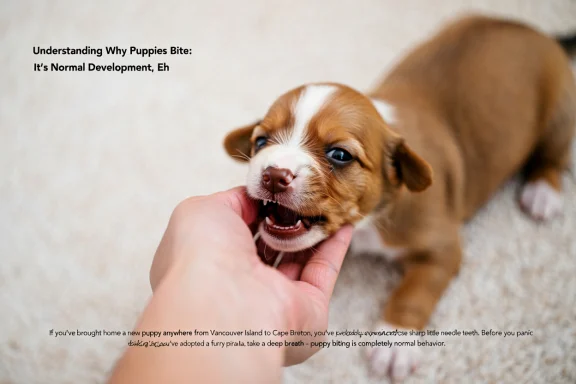
If you’ve brought home a new puppy anywhere from Vancouver Island to Cape Breton, you’ve probably experienced those sharp little needle teeth. Before you panic thinking you’ve adopted a furry piranha, take a deep breath – puppy biting is completely normal behavior.
Puppies explore their world through their mouths, much like human babies do with their hands. It’s their way of learning about texture, taste, and boundaries. Plus, those baby teeth are incredibly sharp for a reason – they’re designed to teach bite inhibition to littermates and mom.
The key is understanding that biting isn’t aggression in young pups. It’s communication, play, and learning all rolled into one very nippy package.
The Science Behind Puppy Development Stages
8-12 Weeks: The Critical Learning Period
During this stage, puppies typically leave their mothers and littermates – often right when Canadian families are settling in after the summer cottage season. This timing is crucial because pups are still learning bite inhibition from their siblings.
Puppies who stay with their litters longer (up to 10-12 weeks) often have better bite inhibition simply because they’ve had more practice with other dogs. If your pup came home earlier, don’t worry – you’ll just need to be their teacher.
12-16 Weeks: Teething Intensifies
Just like Canadian winters, teething can feel endless. Those adult teeth are pushing through, causing discomfort that makes puppies want to chew everything from your favourite slippers to that expensive hockey stick in the garage.
During this phase, biting often increases before it gets better. Your pup isn’t being defiant – they’re literally trying to relieve pain and pressure in their gums.
4-6 Months: The Adolescent Phase
Think of this as the teenage years. Your pup might test boundaries more, especially if they’re experiencing a growth spurt during those long summer days or cozy winter evenings indoors.
Bite Inhibition: Teaching Gentle Mouths
What Littermates Teach Each Other
In a healthy litter, puppies learn bite inhibition through play. When one pup bites too hard, the other yelps and stops playing. This immediate feedback teaches the biting pup that hard bites end the fun.
Canadian dog behaviorists emphasize that this natural learning process is why early socialization with other vaccinated, well-behaved dogs is so valuable – even during our harsh winters when outdoor socialization is limited.
How to Be Your Puppy’s Teacher
The Yelp and Withdraw Method:
- When your pup bites, give a high-pitched “yelp” (like a hurt puppy would)
- Immediately stop all interaction and turn away
- Count to 10-15 seconds, then resume gentle play
- Repeat consistently – consistency is key, whether you’re in a Toronto condo or an Alberta farmhouse
Redirect to Appropriate Chew Items: Always have appropriate chew toys within arm’s reach. Kong toys, bully sticks from Canadian-sourced beef, or frozen carrots can provide relief during teething phases.
Practical Training Techniques That Work
The “Ouch” Protocol
This method works particularly well for families with children:
- Say “Ouch” in a calm but firm voice (not angry or excited)
- Remove your attention by standing up and crossing your arms
- Wait 30 seconds before re-engaging
- Praise immediately when your pup licks or plays gently
Replacing Hands with Toys
Never use your hands as toys. Instead:
- Keep rope toys, rubber balls, and chew toys easily accessible
- When your pup goes for your hands, immediately redirect to a toy
- Make the toy more exciting than your fingers by moving it around
- Praise enthusiastically when they choose the toy over your skin
The Time-Out Method
For persistent biters, especially those going through the teenage phase:
- Use a baby gate to create a “calm down” space
- Place your pup in this area for 2-3 minutes when biting occurs
- Don’t make it punishment – just a break from stimulation
- Return to gentle play once they’ve settled
Managing Different Types of Mouthing Behavior
Play Biting vs. Attention-Seeking
Play biting happens during active play sessions and usually includes play bows, bouncing, and soft body language.
Attention-seeking biting occurs when your pup wants something – food, attention, or to go outside during those -30°C prairie winters when even five minutes feels too long.
For attention-seeking biting, completely ignore the behavior. Don’t look at, talk to, or touch your pup until they stop.
Overexcitement Biting
This often happens when family members come home from work or school, especially during those long winter months when indoor energy builds up.
Management strategies:
- Keep greetings calm and low-key
- Have everyone ignore the puppy until they’re calm
- Practice “four paws on the floor” before any attention is given
- Exercise your pup before family members arrive home
Creating a Bite-Free Environment
Exercise and Mental Stimulation
A tired puppy is a well-behaved puppy. This is especially important during Canadian winters when outdoor exercise might be limited:
- Indoor puzzle games and treat-dispensing toys
- Training sessions (5-10 minutes, multiple times daily)
- Hide-and-seek games throughout the house
- Frozen Kong toys for extended chewing sessions
Consistent Family Rules
Everyone in the household needs to follow the same rules:
- No hands as toys, ever
- Same response to biting from all family members
- Consistent use of redirect commands
- Regular enforcement, whether it’s convenient or not
When to Seek Professional Help
Red Flags to Watch For
While most puppy biting is normal, contact a professional dog trainer (like those certified through the Canadian Association of Professional Dog Trainers) if you notice:
- Biting that draws blood regularly after 4 months of age
- Growling or stiff body language during biting episodes
- Biting that doesn’t respond to consistent training after 4-6 weeks
- Resource guarding combined with biting behavior
Finding the Right Professional
Look for trainers who:
- Use positive reinforcement methods
- Have certifications from recognized organizations
- Offer puppy-specific programs
- Understand breed-specific tendencies
- Can work within your budget (many trainers across Canada offer payment plans)
Long-Term Success Strategies
Building Good Habits Early
The habits you establish in your pup’s first few months at home will last a lifetime. Whether you’re dealing with the spring mud season or winter cabin fever, consistency in training pays off.
Daily structure helps:
- Regular meal times
- Scheduled play sessions
- Consistent bedtimes
- Routine training moments
Patience During Setbacks
Expect occasional setbacks, especially during:
- Growth spurts
- seasonal changes (many dogs get extra energetic during fall and spring)
- Household changes or visitors
- Illness or stress
Remember, you’re not just stopping unwanted behavior – you’re teaching your pup how to interact appropriately with humans for the next 12-15 years.
Conclusion: Raising a Gentle Canadian Canine
Teaching bite inhibition isn’t about stopping your puppy from using their mouth entirely – it’s about teaching them to use it gently and appropriately. With patience, consistency, and the right techniques, even the most mouthy puppy can learn to be a gentle family companion.
Every successful training session, whether it’s during a Prairie chinook or a Maritime fog, brings you closer to having a well-mannered adult dog who knows how to play without causing pain.
The investment you make now in proper training will pay dividends throughout your dog’s life, creating the strong bond that Canine Harmony Training specializes in building across Calgary and beyond.
Ready to transform your nippy puppy into a gentle companion? Start with these techniques today, and remember – every great Canadian dog started as a puppy who needed to learn the ropes. You’ve got this!