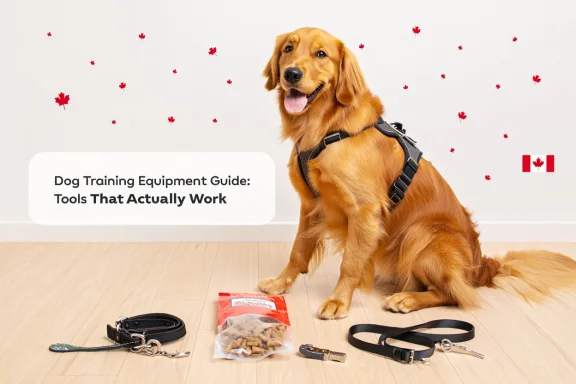
Walking into a Canadian Tire or Pet Valu can feel overwhelming when you’re staring at walls of dog training gear. From fancy electronic gadgets to simple rope leashes, the options seem endless – and so do the price tags. But here’s the thing: successful dog training doesn’t require breaking the bank or filling your closet with every gadget on the market.
After working with hundreds of dogs across Alberta and seeing what actually works in real Canadian homes, we’ve learned that the right equipment makes all the difference. Whether you’re dealing with a Newfoundland puppy who thinks he’s still lap-sized or a rescue dog learning to trust again, having proper gear sets everyone up for success.
Let’s cut through the marketing fluff and focus on equipment that actually works – tested in everything from Calgary’s chinook winds to Vancouver’s endless rain.
Understanding Equipment Categories: The Essentials vs. The Extras
The Big Four: Must-Have Training Equipment
Every Canadian dog owner needs these four categories covered before exploring fancy add-ons:
Collar or Harness: Your dog’s primary identification and control point Leash: The communication line between you and your pup
Training Treats: High-value rewards that motivate learning Basic Training Aids: Simple tools that enhance communication
Think of these as your hockey stick, skates, helmet, and gloves – you can’t play effectively without the fundamentals in place.
The Nice-to-Haves: Specialized Training Tools
Once you’ve mastered the basics, specialized equipment can address specific challenges:
- Clickers for precise timing
- Long lines for recall training
- Puzzle toys for mental stimulation
- Crate training accessories
Collars: Finding the Right Fit for Canadian Dogs
Flat Buckle Collars: The Reliable Workhorses
Best For: Everyday wear, ID tags, well-trained dogs who don’t pull Canadian Considerations: Choose weather-resistant materials for our climate extremes
Look for collars made from:
- Nylon: Dries quickly, perfect for Vancouver rain or prairie snow
- Leather: Durable but requires conditioning in dry climates like Calgary
- Biothane: Waterproof, odour-resistant – ideal for dogs who love muddy off-leash parks
Proper Fitting: You should fit two fingers comfortably between the collar and your dog’s neck. For growing puppies, check weekly – Canadian pups grow fast on our hearty diets!
Martingale Collars: The Gentle Control Option
Best For: Dogs who slip out of regular collars, sighthounds, nervous rescues How They Work: Tightens slightly when pulled but can’t choke
These are particularly popular with Canadian sighthound rescues because breeds like Greyhounds have necks wider than their heads. The collar tightens just enough to prevent escape without causing discomfort.
Red Flags to Avoid:
- Any collar that promises “instant obedience”
- Prong or shock collars (many Canadian cities are banning these)
- Retractable collar attachments that can break under pressure
Harnesses: The Canadian Dog Walker’s Best Friend
Front-Clip Harnesses: Power Steering for Pullers
Top Pick: Ruffwear Front Range Harness (made for outdoor adventures) Why It Works: Redirects pulling energy sideways instead of forward
Perfect for:
- Large breeds who think they’re sled dogs
- Puppies learning leash manners
- Dogs with trachea sensitivity
Canadian Success Story: A 85-pound Bernese Mountain Dog in Calgary went from dragging his owner down icy sidewalks to walking politely beside her in just three weeks using a properly fitted front-clip harness.
Back-Clip Harnesses: Comfort for Trained Walkers
Best For: Dogs who already walk politely, small breeds, senior dogs Avoid If: Your dog pulls – back-clip harnesses can actually encourage pulling
No-Pull Harness Systems: The Problem Solvers
How They Work: Combine front and back attachment points for maximum control Investment Range: $40-$120 CAD for quality options
Look for harnesses with:
- Padded chest plates (comfort during Canadian winter coat season)
- Reflective strips (essential for early morning/evening walks in winter)
- Easy-release buckles (helpful with frozen fingers!)
Fitting Tips:
- Measure around the widest part of the chest
- Check for rubbing under the “armpits”
- Allow room for winter coats if you live in colder provinces
Leashes: Your Communication Lifeline
Standard 6-Foot Leashes: The Goldilocks Choice
Material Breakdown:
- Nylon: Affordable, lightweight, comes in every colour of the rainbow
- Leather: Classic, comfortable grip, gets better with age
- Rope: Great grip even when wet, perfect for Maritime provinces
Width Guidelines:
- Small dogs (under 25 lbs): 1/2″ to 5/8″ width
- Medium dogs (25-60 lbs): 5/8″ to 3/4″ width
- Large dogs (60+ lbs): 3/4″ to 1″ width
Retractable Leashes: The Controversial Choice
Honest Assessment: These are convenience tools, not training tools When They Work: Experienced handlers with well-trained dogs in appropriate environments When to Avoid: Puppies, reactive dogs, crowded areas, icy conditions
Many Canadian dog trainers recommend against retractables because they teach dogs that pulling pressure means “go faster” – exactly the opposite of what we want.
Long Lines: Freedom with Control
Length Options: 15, 30, or 50 feet Best Uses: Recall training, giving energy to high-drive breeds safely Canadian Tip: Bright colours show up better against snow and fallen leaves
Training Treats: Fuel for Success
High-Value Options That Work in Cold Weather
Freeze-Dried Liver: Lightweight, doesn’t freeze solid, irresistible to most dogs Cheese: Easy to cut into tiny pieces, motivates even picky eaters Commercial Training Treats: Look for Canadian brands like PureBites or Crumps’ Naturals
Size Rule: Training treats should be smaller than your pinky nail – think “taste,” not “meal”
Storage Tips for Canadian Climate:
- Keep treats in sealed containers to prevent freezing
- Carry treats in inside pockets during winter walks
- Choose options that won’t crumble in treat pouches
Essential Training Aids That Actually Work
Clickers: Precision Communication Tools
How They Work: Mark exact moments of good behavior with consistent sound Canadian Success Rate: 85% of dogs respond positively within first week Cost: $2-$15 CAD – minimal investment, maximum impact
Alternatives: Verbal markers like “Yes!” work just as well if you’re consistent
Treat Pouches: Hands-Free Convenience
Features to Look For:
- Magnetic closures (work even with gloves)
- Belt clips that won’t break in cold weather
- Easy-clean materials (Canadian dogs get muddy!)
Long Training Lines: Safe Freedom
When to Use: Teaching recall in unfenced areas, giving high-energy dogs exercise Safety First: Never use around other dogs or in crowded areas
What to Avoid: Equipment That Doesn’t Work
Shock Collars and Prong Collars
The Reality: These tools can create fear, anxiety, and aggression Legal Status: Several Canadian municipalities have banned or restricted these devices Better Alternatives: Positive reinforcement training with proper equipment
Retractable Leashes for Training
Why They Fail: Teach dogs that pulling pressure means more freedom Injury Risk: Higher rates of cuts, burns, and entanglement injuries
“Miracle” Training Gadgets
If it promises instant results or seems too good to be true, it probably is. Solid training takes time, consistency, and the right basic equipment.
Shopping Smart: Where to Buy in Canada
National Retailers
- Canadian Tire: Basic equipment, competitive prices
- Pet Valu: Wide selection, knowledgeable staff
- PetSmart: Frequent sales, online ordering with store pickup
Online Canadian Options
- Ren’s Pets: Ontario-based with Canada-wide shipping
- Mondou: Quebec-based, bilingual customer service
- Amazon.ca: Convenient but verify seller locations for warranty issues
Local Pet Stores
Support your community businesses – they often carry unique brands and provide personalized fitting services.
Sizing and Fitting: Getting It Right the First Time
Measuring Your Dog Properly
Neck: Measure where the collar sits, add 2 inches Chest: Widest part of ribcage for harnesses Weight: Confirm current weight – don’t guess!
Signs of Proper Fit
Collars: Two fingers fit underneath comfortably Harnesses: No rubbing, lifting front legs naturally, secure but not tight **No red marks or hair loss after wear
When to Remeasure
- Puppies: Every 2-3 weeks during growth spurts
- Adult dogs: Seasonally (weight fluctuations with activity levels)
- Senior dogs: Every 6 months (muscle loss or weight gain)
Building Your Training Kit: Budget-Friendly Approach
Starter Kit (Under $75 CAD)
- Quality flat collar: $15-25
- 6-foot nylon leash: $12-20
- Basic harness: $25-35
- Clicker and treats: $10-15
Intermediate Kit (Under $150 CAD)
- Add: Front-clip harness, treat pouch, long line
- Upgrade: Leather leash, premium treats
Advanced Kit (Under $300 CAD)
- Professional-grade equipment
- Multiple specialized tools
- Weather-resistant options
Maintenance and Care: Making Equipment Last
Cleaning Guidelines
- Nylon gear: Machine wash cold, air dry
- Leather: Condition monthly, especially in dry climates
- Metal hardware: Check for rust, especially with road salt exposure
Replacement Indicators
- Frayed stitching or worn hardware
- Fading that affects visibility
- Any damage that could compromise safety
Replace equipment before it fails – your dog’s safety is worth more than saving a few dollars.
Making the Right Choice for Your Canadian Dog
The best training equipment is what works for your specific dog in your specific situation. A Border Collie in rural Saskatchewan has different needs than a French Bulldog in downtown Toronto. Consider:
- Your dog’s size, age, and energy level
- Your local climate and terrain
- Your training goals and experience level
- Your budget and long-term needs
Remember: expensive doesn’t always mean better, and the fanciest gear won’t replace good training techniques. Focus on quality basics that fit properly and support positive training methods.
Start Building Your Perfect Training Kit Today
Ready to set your dog up for training success? Start with a properly fitted collar or harness, a 6-foot leash, and some high-value treats. These three items will handle 90% of your training needs while you and your dog learn together.
For personalized equipment recommendations and professional training support in the Calgary area, consider connecting with certified dog trainers who can assess your specific needs and help you choose tools that work for your unique situation.